
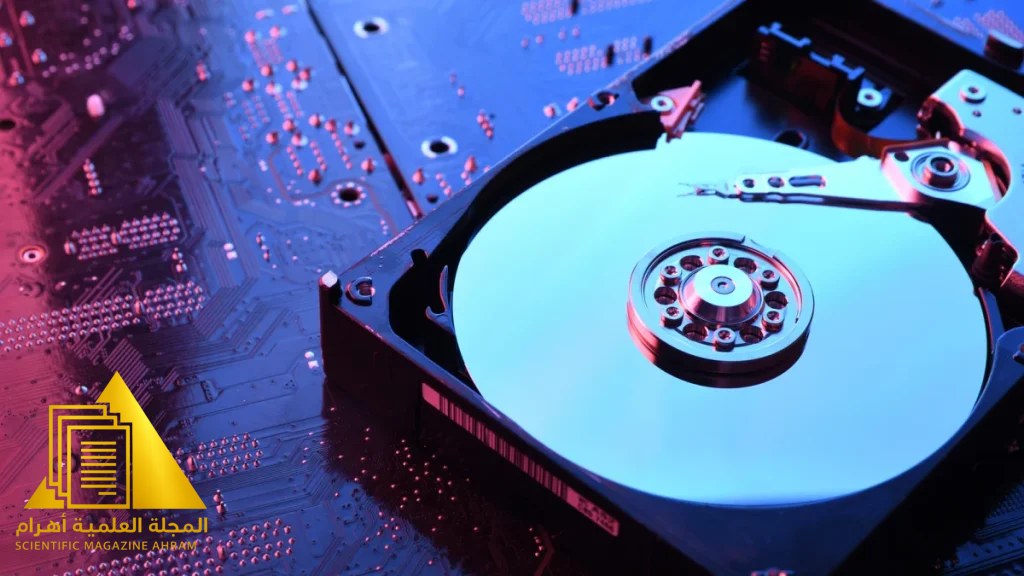

Between Speed and Permanence: The Essence of Computer Memory
At the heart of every smartphone or laptop, a complex and invisible data exchange takes place. Imagine your device is a workspace: volatile memory is the desktop where you keep the papers you are currently working on, while non-volatile memory is the large filing cabinet where you store your documents for years. This integration is what makes our devices run exceptionally smoothly.
Volatile Memory: The Speed Engine
Volatile memory—most notably random-access memory (RAM)—is known as the mastermind behind a device’s speed. Its primary function is to hold the data that the processor needs at the current moment to run applications and games. This memory boasts tremendous reading and writing speed, but it suffers from a fundamental weakness: it is “volatile,” meaning it wipes everything it contains as soon as the power supply is cut. For this reason, if your device shuts down suddenly before you save your work, the data in the temporary memory evaporates completely.
Non-Volatile Memory: The Cabinet of Digital Memories
In stark contrast comes non-volatile memory, which we find in solid-state drives (SSDs) or memory cards. This memory is designed to retain information permanently, regardless of the power state. When you turn off your device, your photos, files, and operating system remain safely stored inside this memory. Although it is not as fast as RAM, it is the backbone of our digital data continuity.
How the Two Work in Harmony
The secret to the efficiency of modern devices lies in the coordination between these two types. When you click on an application icon, the processor transfers the program data from the “storage cabinet” (non-volatile memory) to the “desktop” (volatile memory). This process allows the processor to access data instantly and execute commands in fractions of a second. Once you finish your work and save the file, the data moves from the volatile memory to return and settle safely in the non-volatile memory.
Understanding this technical harmony helps us appreciate the technology we use every day, and makes us realize the importance of investing in devices with sufficient memory capacity to ensure an ideal balance between performance speed and storage capacity.
By: Hany Sallam
Source: engadget.com


Latest video
تابع معنا تحليل قراءة الصحف اليومية مع الكاتب الصحفي Hany Sallam عبر