
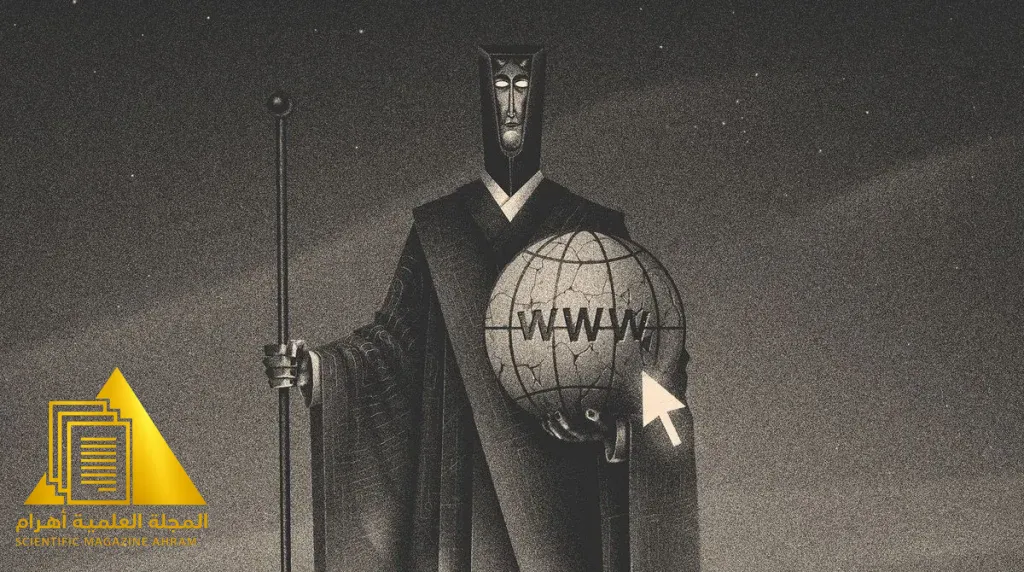

Between the Hope of Connection and the Algorithmic Nightmare
When the internet was first born, it seemed like the great window that would carry humanity into a golden age of communication and knowledge sharing. Yet today’s reality reflects a completely different picture; digital spaces have turned into a fertile environment that feeds the worst human traits, pushing societies toward polarization and continuous anger, rather than the intended closeness.
The Dominance of Digital Monopoly and Empty Content
The internet is no longer a free space for exchanging ideas; instead, it has come under the grip of giant companies that monopolize data and steer attention. This takeover has coincided with the flooding of platforms with what is known as “junk content” or consumerist content aimed solely at attracting clicks, which has led to a decline in the real value of information and the flattening of public awareness in favor of cheap sensationalism.
How Does the Internet Exploit Our Primal Instincts?
Today’s social media algorithms rely on an attention economy model, and it has been scientifically proven that negative emotions like anger, fear, and bigotry are the fastest to draw engagement. Thus, the human psyche has found itself trapped in a digital system that applauds aggressiveness and rewards bullying and extremism, which justifies the mounting calls to fundamentally rethink this space and establish more humane and cleaner alternatives.
By: Hany Sallam
Source: wired.com


Latest video
تابع معنا تحليل قراءة الصحف اليومية مع الكاتب الصحفي Hany Sallam عبر