

The Will of the People and Political Leadership
Combine with the Efforts of the Development Government to Build the Human Being
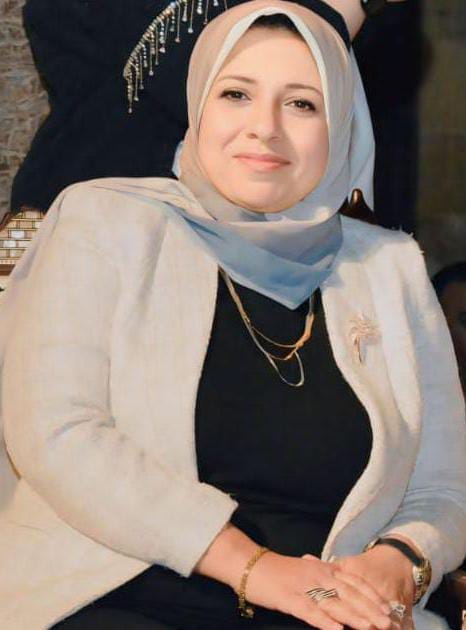
Prof. Randa Shaheen
The people of Egypt are among the greatest in history and deserve a dignified life and greater prosperity. To achieve this, the political leadership has directed the new government to focus on human development. In this context, the prime minister was tasked with supporting education and health, given their critical impact on building and stabilizing society, preserving its assets, and moving steadily toward comprehensive development. The new government has clear objectives focused on developing the Egyptian citizen, continuing economic reform, and devising new plans to increase investment, while ensuring that economic investment goes hand in hand with education and health, as each strongly influences the other. The new government must build a better future for Egypt and work to select the most suitable candidates to manage key files—chief among them education, health, and industry—to fulfill the people’s aspirations in light of the sustainable development vision and the building of the New Republic, while infusing state institutions with new blood and a fresh, advanced mindset.
• Education drives the prosperity of nations, and the status of the teacher is the fundamental pillar of purposeful education aimed at building the state in its strategic and developmental dimensions. This education seeks to achieve advanced levels in modern technology that meet the demands of the new labor market and produce good educational outcomes as a driver of personal and community development. Education is viewed as a pillar for teaching individuals human values such as communication, understanding others, mercy, peace, justice, and doing good. It also contributes to anticipating the future, investing time, and harnessing natural resources within the framework of sustainable development. Reflection on the importance of education reveals an urgent and necessary need to focus on human development in light of Egypt’s Vision 2030 and the building of the New Republic. The political leadership’s directions in this context carried a clear message to continue development efforts in political participation, which means maintaining participatory methods and dialogue. For this reason, support has been directed toward national dialogue aimed at exchanging ideas to formulate a national strategy with defined priorities for the benefit of the nation and the citizen, working to ensure that all political spectra merge into the crucible of the Egyptian political scene to entrench citizenship and social peace, focusing on investing in human capital, and building a strategy for raising a competitive generation that possesses a national identity. This is what President Abdel Fattah El-Sisi pointed to regarding the need for the coming generation to learn computing skills, artificial intelligence, and various aspects of programming to keep pace with future labor market demands.
• Education is undoubtedly the engine of development and one of the strongest tools for reducing poverty, improving health, achieving gender equality, and maintaining peace and stability. Education also aims to equip students with future skills that differ completely from what traditional educational systems have offered for years, making graduates capable of competing in the international labor market. The Ministry of Education has made serious attempts to develop education since 2017 and established learning based on acquiring higher-order thinking skills aimed at creativity and distinction. This was evident in the 2.0 curriculum, which began in kindergarten and reached the end of primary school in an interconnected, cumulative structure that seeks to build the Egyptian citizen. In this regard, governments must work within a scientific and objective institutional framework, moving away from individuality and subjectivity. By this, I mean that there should be a long-term strategic plan to develop state institutions regardless of who manages them. At some stage, the roles of decision-makers within an institution can be integrated in a way that fulfills transitional goals; we are all cogs in the machinery of the state, and decision-makers should have a clear vision translated into interconnected plans aimed at achieving the main goals of developing and building individuals suited to the New Republic. For example, the Ministry of Education should complete the development work carried out between 2017 and 2022.
• Healthcare is another top priority for the development government, and it is closely linked to education, as medical staff graduate from educational institutions. Caring for citizens’ health has a direct relationship with the economy and supports production across all fields. The universal health insurance system implemented in some of Egypt’s governorates is evidence of successful steps toward achieving good health for citizens, and we hope civil society organizations will participate in developing health facilities such as hospitals and health centers, and that the health insurance system will cover all segments of society, especially informal workers.
Throughout its ancient and modern history, Egypt has lived through many periods of prosperity and hardship. Yet it has remained Egypt—with its strength, resilience, and the awareness of its people to overcome crises and difficulties. How much today resembles yesterday: an unbounded economic crisis occurred in Egypt during the time of the prophet Joseph, and Joseph, peace be upon him, managed to plan for the development of agricultural resources until prosperity spread across Egypt, which the Quran describes as the storehouses of the earth. Egypt possesses all the ingredients for sustainable development, from human power to diverse resources in agriculture, industry, and commerce, and we do not overlook antiquities and tourism. We only need all state institutions to pull together to perform their roles in a specific, integrated manner to build the nation.
God bless Egypt
and protect its leadership, government, and people to maintain its security and stability.
Note: Publishing from the site is prohibited except after referring to the Chairman of the Board of Directors of Ahram Science Magazine and obtaining official permission.


Latest video
تابع معنا تحليل قراءة الصحف اليومية مع الكاتب الصحفي Hany Sallam عبر