
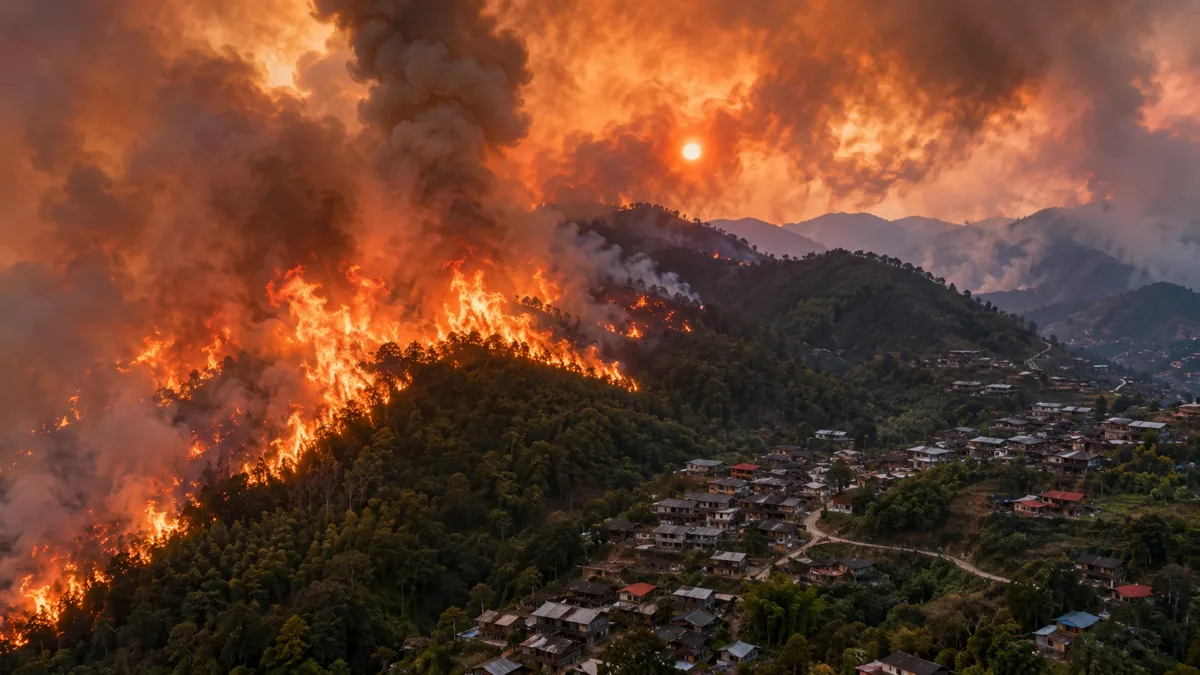

Climate scientists have warned that Asia is experiencing one of the most severe environmental fire waves in its modern history, following record-breaking fire levels during the early months of 2026.
Researchers believe the situation may worsen during the coming summer with the approach of the El Niño climate phenomenon and rising global temperatures.
Unprecedented Figures
Recent data revealed that fires in Asia have consumed about 44 million hectares since the beginning of the year, a figure that is roughly 40% higher than the previous record set in 2014.
The hardest-hit areas included:
India
Myanmar
Thailand
Laos
Parts of China
Scientists say that severe climate change has helped spread fires at an unusual pace this year.
Why Are Fires Spreading This Fast?
Researchers explained that parts of Asia experienced heavy rainfall during the past season. Afterward, conditions quickly shifted to extreme drought and extreme heat.
This sudden change led to the growth of massive amounts of vegetation and grass, which later turned into fast-igniting fuel as temperatures and dryness rose.
Scientists also expect the El Niño phenomenon to increase the risks of:
Drought
Heatwaves
Wildfires
Declining water resources
during the second half of this year.
Global Environmental Concerns
Environmental experts believe that the continuation of these fires may significantly affect air quality and biodiversity in Asia.
At the same time, massive fires may contribute to increasing global carbon emissions, which could accelerate the pace of climate change.
Researchers also fear that some Asian countries may experience an unprecedented summer in terms of heat and drought, especially if current climate conditions continue.
Warnings of a Dangerous Summer
Climate scientists stressed that the world may face one of the most climate-extreme years on record in 2026.
Researchers believe that the combination of climate change and the El Niño phenomenon may push some regions into dangerous levels of drought, fires, and severe weather.
Hany Sallam


Latest video
تابع معنا تحليل قراءة الصحف اليومية مع الكاتب الصحفي Hany Sallam عبر